
Decentralizing Public Health: The Case for the Medical Freedom Act
Shifting authority is not the same as decentralizing it.

Following the announcement of significant changes to the CDC’s recommended childhood vaccine schedule, several states began reevaluating policies and statutes governing school vaccination requirements. Instead of relying on the recommendations of a single, centralized, federal agency, states are amending their laws to eliminate automatic deference to federal guidance, particularly that of the CDC’s Advisory Committee on Immunization Practices (ACIP).
For perspective, as of June 2025, “nearly 600 statutes and regulations across 49 states, three territories, and Washington, D.C., referenced the CDC’s ACIP,” demonstrating how deeply federal advisory guidance has been embedded in state law. When the committee adds a vaccine to its schedule, state policies, from school requirements to insurance coverage, often update automatically. An example is Alabama Administrative Code r. 420-6-1-.03, which reads:
“The Department shall require immunizations for school attendance consistent with the recommendations of the Advisory Committee on Immunization Practices (ACIP).”
Why is decentralization of public health the appropriate response by state governments?
Decentralized public health is not a novel idea—it is how the American system was designed to work. From the founding of the republic, the protection of public health and welfare has been a responsibility reserved to the states. As the nation approaches its 250th anniversary, returning to this principle would mean restoring public health governance to its constitutional roots.
As U.S. Senator Rand Paul wrote in 2022:
“Arguments for the dispersion of power are essentially arguments for limiting the damage that one man’s fallibility can create.”
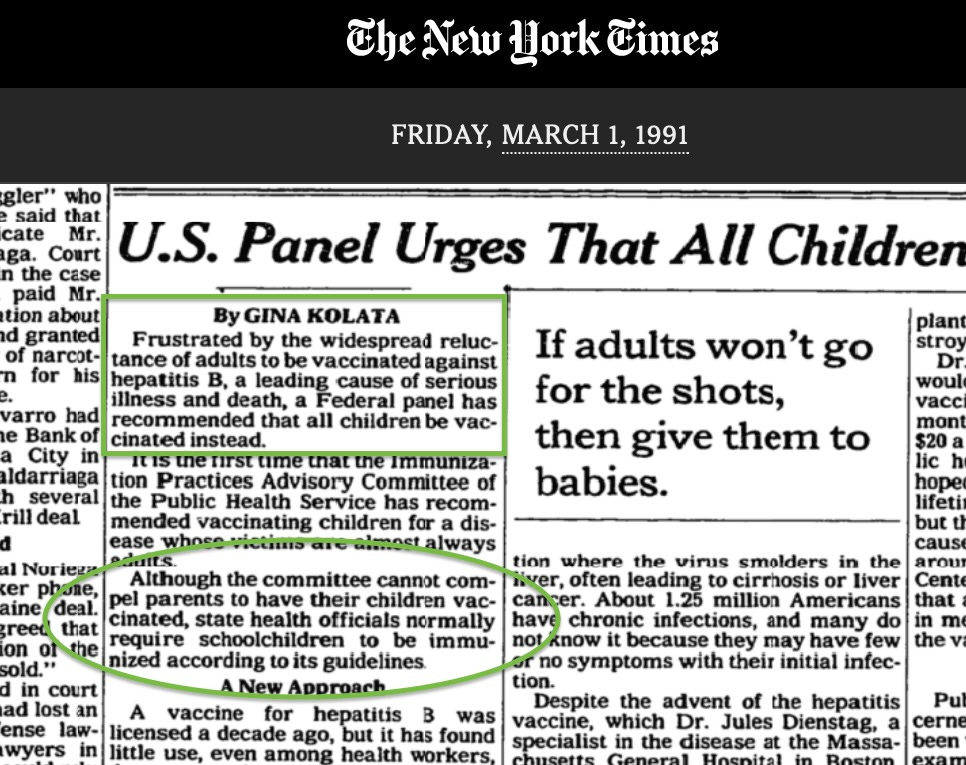
The principle applies equally to public health policy: concentrating authority in a single federal body allows one set of recommendations to shape policy nationwide. For decades, rather than exercising their own constitutional authority over public health, states have effectively served as enforcers of federal policy by embedding ACIP guidance into state statutes and administrative rules. In 1991, for example, when efforts to increase adult hepatitis B vaccination failed, the CDC added the vaccine to the childhood schedule, a move that ensured widespread uptake through existing state school immunization laws. As The New York Times reported at the time,
“Although the committee cannot compel parents to have their children vaccinated, state health officials normally require schoolchildren to be immunized according to its guidelines.”
State deference to federal recommendations is especially egregious considering the federal government’s role in removing the constitutionally protected right to seek redress for harm caused by vaccines in a court of law with the 1986 passage of the National Childhood Vaccine Injury Act (NCVIA)—a law enacted to provide compensation for children injured or killed after receiving vaccines required under state compulsory vaccination policies. In 1986, Congressman Henry Waxman, author of the NCVIA, acknowledged,
“The particular tragedy and the paradox of vaccine injuries is that these children really are hurt in the line of public duty.”
In his opening statement during a 1984 senate hearing on NCVIA, Senator Chuck Grassley noted,
“In all of our states, vaccination is required before a child will be allowed to enter public school. Federal, state, and local government officials urge all parents to immunize their children. For all practical purposes, immunization programs have become obligatory. Should a child sustain injury as a consequence of such an immunization program, it hardly seems fair that the child or the parents should bear the entire burden of the consequences which may follow.”
The passage of NCVIA resulted in a system in which vaccines could be mandated through state law while the manufacturers producing them were shielded from traditional civil liability under federal law. As detailed in What Congress Knew in 1986: The Hidden History of Vaccine Injury Policy, school mandate-associated vaccine injury was widely discussed when the law was enacted. Congress responded to state mandate-associated vaccine injury not by protecting children from harm, but by shielding vaccine manufacturers from liability. By ensuring widespread uptake, compulsory vaccination laws also ensure that vaccine injuries will inevitably continue to occur.
Stand for Health Freedom offers a clear warning to states reclaiming authority from the federal government: do not transfer it to financially invested third parties.
In theory, the decentralization of public health—in this case, no longer deferring to guidance from ACIP—is ideal. States should reclaim their rightful authority over public health policy, power never granted to the federal government under the Constitution, and end the practice of enforcing mandates by proxy.
Current decentralization efforts, though, undermine public trust even further by shifting state authority to third parties with direct financial interests in the markets affected by their recommendations, specifically organizations like the American Academy of Pediatrics (AAP), American Medical Association (AMA), and the American Academy of Family Physicians (AAFP). Each one of these organizations partners with vaccine manufacturers, companies that will benefit directly from state compulsory laws mandating their products. Public health guidance that is effectively outsourced to organizations with financial ties to the products being mandated undermines public trust and compromises the integrity of state governance.
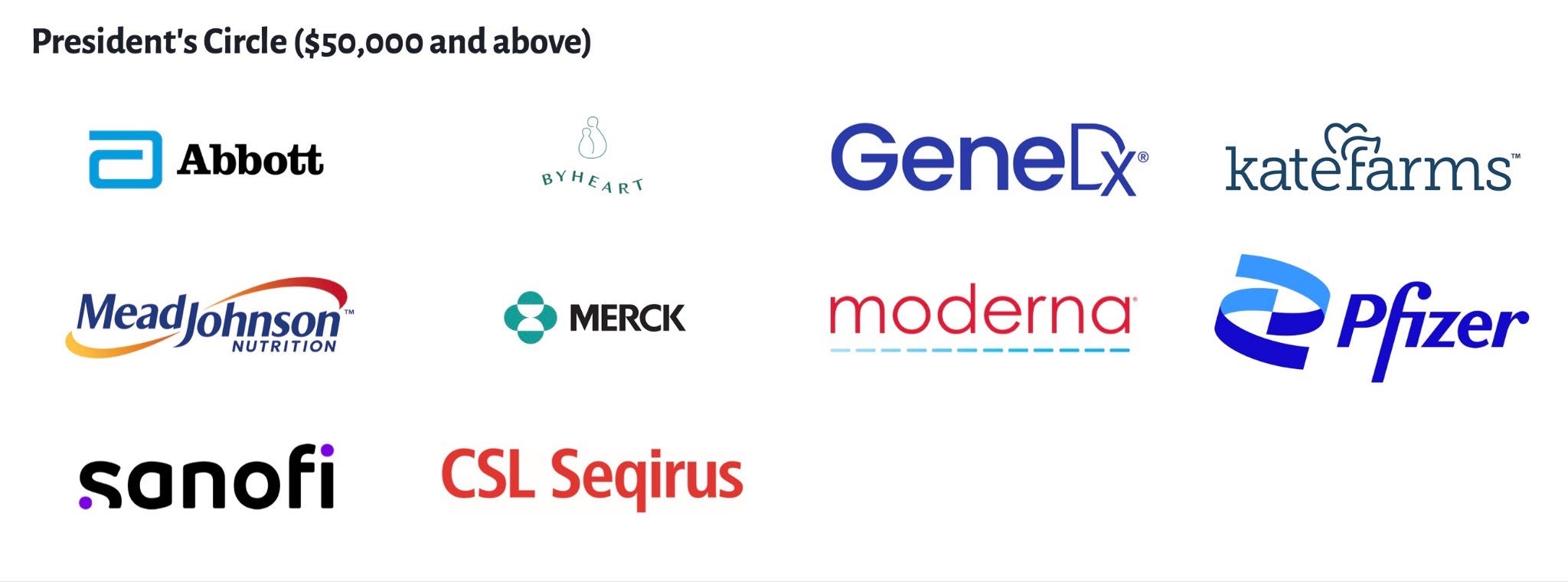
Compounding these concerns, the AAP advocates for the removal of non-medical vaccine exemptions, a policy position in direct conflict with parental rights and constitutionally protected religious freedom. They note on their corporate sponsorship website that “supporters help us advance our mission.” That mission would include removing religious exemptions.
“The AAP advocates for the elimination of nonmedical exemptions from immunizations as contrary to optimal individual and public health.”
Ceding authority to organizations like these creates significant opportunities for fraud, abuse, and regulatory capture. These policy situations mirror the same conflicts of interest that led to reforms of ACIP last year.
If public health authority were truly decentralized, what would that look like?
In 2023, Wyoming and Louisiana introduced legislation aimed at limiting the authority of the CDC. These efforts demonstrate that calls for decentralized public health are not new, but often arise from distrust of whichever administration happens to control federal policy—yet another reason state public health policies should be fully decoupled from the federal government. Every state maintains its own department of health, which should serve as a safeguard against overzealous federal recommendations—or, as the COVID-19 response revealed, against unsupported public health directives altogether. Legislatures should also be wary of tying state health policy to federal grant funding, which too often comes with strings attached that erode state independence and quietly transform guidance into compliance.
True decentralization means returning medical decisions to the individual—exactly what the Medical Freedom Act was designed to do.
Finally, state legislatures must remember that the first duty of public health is not to compel medical compliance, but to protect the people they serve. Policies should safeguard every citizen—especially children—from unethical medical mandates while restoring accountability for harm, including liability for vaccine manufacturers. States reclaiming authority from federal agencies should ground public health policy in informed consent, parental rights, and religious liberty.
Legislators across the country are introducing the Medical Freedom Act—legislation that ensures that no one and no government mandates a medical intervention—protecting public health, and the citizens it serves, from coercion, conflicts of interest, and captured policymaking. The Medical Freedom Act is the answer to restoring ethical medicine, protecting individual rights, and ensuring that medical decisions remain where they belong: with patients, families, and their trusted healthcare providers—not government mandates or institutional pressure.
Thirteen states have introduced variations of the Medical Freedom Act in 2026, reflecting a growing national movement to restore informed consent and protect individuals from medical mandates imposed by government or private entities. Stand for Health Freedom (SHF) is proud to partner with Health Freedom Defense Fund (HFDF) in bringing together state leaders, legislators, advocates, and organizations across the country to advance the Medical Freedom Act and restore informed consent in public policy. SHF and HFDF are joined by fifteen national organizations in a growing national coalition working to advance the Medical Freedom Act in all 50 states.
Speak up. Show up. Stand firm. Freedom grows when we do.
